And why take away the spindle-grille, you just got it right, looked great on my previous LC 500 and my previous 6-cyl RX 450h f-sport. 🤔 And, now the six cyl is gone as well… Can´t you see whatˋs happening to other brands? Do Lexus want to go down the recent path of Porsche, for example?I’m in almost the exact same situation. It hurts me a lot to say this brand is trash now. We owned IS, RX, NX, ES, and now GX and LC. More than a decade of loyalty to Lexus. From the moment I got my driver’s license, every car I chose was a Lexus. That trust, that excitement, that passion once truly meant something. But now, all of that is gone.
So, Lexus, don’t blame people for calling your cars “boring” again, It isn’t hate, it’s just the truth.

You are using an out of date browser. It may not display this or other websites correctly.
You should upgrade or use an alternative browser.
You should upgrade or use an alternative browser.
Official Lexus Future Product & Powertrain Megathread
- Thread starter ssun30
- Start date
I'm not sure where to put this, but in the several years I've been on this site (and the years before when I was just lurking), I feel that a common trend has been shifting goal posts and trying to find solace/swallowing the rumors coming out. Unfortunately, we've been at the point where there's not much to look forward to, and any exciting development gets snatched away from Lexus.
After the IS-F came out, I was excited to see what would happen with the GS and then RC. When both came out with the revised 5.0 V8, I was happy they existed despite slowly being left behind by competitors in terms of performance.
When rumors of a next generation GS were swirling but then canceled, I was hopeful that the IS would get a new platform (because that was still a relatively strong seller). What did come out was the Mirai, an even more niche product that would only cater towards very small markets.
Crazy thing is...is that the IS is still on the New N platform dating back over a decade now and the 500 F Sport Performance was a decent consolation (far from the rumored GS-F with a possible 4.0 TT V8) though.
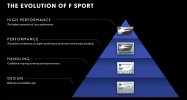
The LC was supposed to spawn into a LC F (and that really caught my attention)...but we now know what will happen to that project. And now F is expected to exist as a software mode, far from what F originally stood here (how are software changes the highest expression of Lexus performance???):
Also, now the LS (after being left to wither) and RC are bowing out (and the LC is likely to follow). The portfolio of unibody RWD products is non-existent, and the lack of any new platforms or commitment to GA-L makes me believe there's no future for RWD products in Lexus. It seems like there's so much resistance against RWD unibody products at Lexus, but then there's also talks about adding GR, Crown, and Century as branches of Toyota (with the Crown and Century recycling the same GA-K platform). How come those products have been given the green light, whereas Lexus products that were deep into the development timeline canceled (especially products that will likely sell more than these niche coupes/sports cars)?
I can't be the only young adult that was super excited to jump into Lexus. Would it be too much to ask for to get a new IS on a new platform with new engines??
After the IS-F came out, I was excited to see what would happen with the GS and then RC. When both came out with the revised 5.0 V8, I was happy they existed despite slowly being left behind by competitors in terms of performance.
When rumors of a next generation GS were swirling but then canceled, I was hopeful that the IS would get a new platform (because that was still a relatively strong seller). What did come out was the Mirai, an even more niche product that would only cater towards very small markets.
Crazy thing is...is that the IS is still on the New N platform dating back over a decade now and the 500 F Sport Performance was a decent consolation (far from the rumored GS-F with a possible 4.0 TT V8) though.
The LC was supposed to spawn into a LC F (and that really caught my attention)...but we now know what will happen to that project. And now F is expected to exist as a software mode, far from what F originally stood here (how are software changes the highest expression of Lexus performance???):
Also, now the LS (after being left to wither) and RC are bowing out (and the LC is likely to follow). The portfolio of unibody RWD products is non-existent, and the lack of any new platforms or commitment to GA-L makes me believe there's no future for RWD products in Lexus. It seems like there's so much resistance against RWD unibody products at Lexus, but then there's also talks about adding GR, Crown, and Century as branches of Toyota (with the Crown and Century recycling the same GA-K platform). How come those products have been given the green light, whereas Lexus products that were deep into the development timeline canceled (especially products that will likely sell more than these niche coupes/sports cars)?
I can't be the only young adult that was super excited to jump into Lexus. Would it be too much to ask for to get a new IS on a new platform with new engines??
Looking back at my original post, it really highlights how powertrain development is the central point to all business plans and strategies of a car company. You can talk about the F brand all you want, but at the end of the day, if there's no engine, there's no car.
In the past decade, we saw Toyota going from proactive development for market competitiveness, to reactive development for regulations compliance. They admitted this themselves: the chief engineer of Land Cruiser Prado J250 said they only launch new powertrains and platforms when emissions and safety regulations could no longer be met with existing products. This means they will inevitably fall behind and sometimes even have periods where products are completely banned due to non-compliance (happened to 1NX in China, 3IS and RC in Europe).
Go back 2 decades when Toyota first released the "xR" series of engines. They were the first company on the market to offer direct-port dual injection technology (2GR-FSE), combined Otto-Atkinson cycle operation (2GR-FXE), water-cooled EGR system, electronic VVT (1UR-FSE), continuous VVL (2ZR-FAE) etc. The Dynamic Force family also used to be quite advanced for its time, but is also approaching its 8th year without a technology refresh (the ESTEC refresh of the GR/UR/AR series happened in their 8th year). Now the entire TMC lineup have really outdated powertrains that are in danger of failing emissions again. They are also way too late to re-invest in forced induction. The 8AR-FTS was the first FI engine they developed since 3S-GTE, and its Dynamic Force successor is actually less advanced. When they finally decided to build a high-stress, high output FI engine (V35), they got disastrous reliability.
With this kind of company culture, it's impossible to have a competitive performance lineup where staying at the cutting edge is key. If we were to believe BestCar's rumors, they were constantly changing the goal post for the 4.0L V8TT engine: first 600PS, then 650PS, then decided to create a high-torque variant for LF-1, then found out they couldn't pass Euro 6d causing a 2 year delay, then moved the target up again to 700+PS, then had to reduce the target to 650PS because Euro 7 is knocking on the door. They were always benchmarking against what's available at the time, not future-proofing it. It should be such a simple concept: if you design a product to just compete with existing products today, you already lost because competitors are designing their next generation at the same time.
In the past decade, we saw Toyota going from proactive development for market competitiveness, to reactive development for regulations compliance. They admitted this themselves: the chief engineer of Land Cruiser Prado J250 said they only launch new powertrains and platforms when emissions and safety regulations could no longer be met with existing products. This means they will inevitably fall behind and sometimes even have periods where products are completely banned due to non-compliance (happened to 1NX in China, 3IS and RC in Europe).
Go back 2 decades when Toyota first released the "xR" series of engines. They were the first company on the market to offer direct-port dual injection technology (2GR-FSE), combined Otto-Atkinson cycle operation (2GR-FXE), water-cooled EGR system, electronic VVT (1UR-FSE), continuous VVL (2ZR-FAE) etc. The Dynamic Force family also used to be quite advanced for its time, but is also approaching its 8th year without a technology refresh (the ESTEC refresh of the GR/UR/AR series happened in their 8th year). Now the entire TMC lineup have really outdated powertrains that are in danger of failing emissions again. They are also way too late to re-invest in forced induction. The 8AR-FTS was the first FI engine they developed since 3S-GTE, and its Dynamic Force successor is actually less advanced. When they finally decided to build a high-stress, high output FI engine (V35), they got disastrous reliability.
With this kind of company culture, it's impossible to have a competitive performance lineup where staying at the cutting edge is key. If we were to believe BestCar's rumors, they were constantly changing the goal post for the 4.0L V8TT engine: first 600PS, then 650PS, then decided to create a high-torque variant for LF-1, then found out they couldn't pass Euro 6d causing a 2 year delay, then moved the target up again to 700+PS, then had to reduce the target to 650PS because Euro 7 is knocking on the door. They were always benchmarking against what's available at the time, not future-proofing it. It should be such a simple concept: if you design a product to just compete with existing products today, you already lost because competitors are designing their next generation at the same time.
I remember when the 3UR 5.7 V8 came out in 2007. The Tundra absolutely crushed the big three's half-ton trucks. It had considerably higher hp/torque ratings, higher tow ratings, and massive brakes. Even when the 5.7 ended production, it was still competitive with the half-ton V8s from other manufactures.
The V35 and T24 were barely competitive when introduced. The GM 2.7T puts out more hp/torque than the T24. The Hurricane I6 gets considerably better fuel milage than the V35. RAM RHO with 35" tires and 540hp is even a bit better than a V35 Tundra on 35s. Other manufactures are already offering better engines than the V35.
I have high hopes for the G20E, and hopefully that will spur on the development of new V6 or I6 engines.
The V35 and T24 were barely competitive when introduced. The GM 2.7T puts out more hp/torque than the T24. The Hurricane I6 gets considerably better fuel milage than the V35. RAM RHO with 35" tires and 540hp is even a bit better than a V35 Tundra on 35s. Other manufactures are already offering better engines than the V35.
I have high hopes for the G20E, and hopefully that will spur on the development of new V6 or I6 engines.
Last edited:
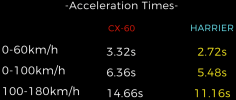
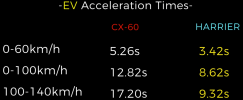
We can complain about TMC's longitudinal platform/powertrain strategy all day long. But at the end of the day for vast majority of their sales, they REALLY optimized the transverse hybrid/plug-in hybrid formula. A competitor can build a car with exact same specs and get nowhere close to their performance and/or efficiency. It's either that, or Mazda did a really terrible job. The CX-60 PHEV and Harrier PHEV share the same battery, have almost identical motor output and power-to-weight ratio, yet the "sport oriented" longitudinal FR platform got absolutely smoked by the pedestrian transverse platform on the straight line.

First gen GS 450h was ahead of its time, but they did not build on its success. They should have made the FT-HS. They didn’t.We can complain about TMC's longitudinal platform/powertrain strategy all day long. But at the end of the day for vast majority of their sales, they REALLY optimized the transverse hybrid/plug-in hybrid formula. A competitor can build a car with exact same specs and get nowhere close to their performance and/or efficiency. It's either that, or Mazda did a really terrible job. The CX-60 PHEV and Harrier PHEV share the same battery, have almost identical motor output and power-to-weight ratio, yet the "sport oriented" longitudinal FR platform got absolutely smoked by the pedestrian transverse platform on the straight line.
1) Its hybrid system is too complicated (essentially a 2-stage hybrid that evolved into the 4-stage hybrid on LS/LC500h). It has its benefits but was never practical at large scale. With the benefit of hindsight, the multi-stage power-split hybrid is a flawed concept and wasted R&D, and Toyota should have switched to the simpler P2 parallel concept earlier (despite the latter offering less efficiency and performance benefit).First gen GS 450h was ahead of its time, but they did not build on its success. They should have made the FT-HS. They didn’t.
2) Energy storage technology back then could not achieve the performance goal they set. They only had NiMH batteries or supercapacitors. The former won't provide enough power and the latter won't store enough energy. The FT-HS was never meant to be mass-producible.
We can complain about TMC's longitudinal platform/powertrain strategy all day long. But at the end of the day for vast majority of their sales, they REALLY optimized the transverse hybrid/plug-in hybrid formula. A competitor can build a car with exact same specs and get nowhere close to their performance and/or efficiency. It's either that, or Mazda did a really terrible job. The CX-60 PHEV and Harrier PHEV share the same battery, have almost identical motor output and power-to-weight ratio, yet the "sport oriented" longitudinal FR platform got absolutely smoked by the pedestrian transverse platform on the straight line.
View attachment 10849
View attachment 10850
CX PHEV fastest acceleration mode is Offroad not Sport
https://toyotatimes.jp/en/toyota_news/japan_mobility_show_2025/002_1.html
Lexus is gonna carve its path and they're not gonna "imitate" no one. They're also going back to their roots with the next Lexus LS family of vehicles.
Lexus is gonna carve its path and they're not gonna "imitate" no one. They're also going back to their roots with the next Lexus LS family of vehicles.

Gecko
Administrator
- Messages
- 5,168
- Reactions
- 12,755
https://toyotatimes.jp/en/toyota_news/japan_mobility_show_2025/002_1.html
Lexus is gonna carve its path and they're not gonna "imitate" no one. They're also going back to their roots with the next Lexus LS family of vehicles.
My "real" job is in marketing and even with that, this is one of the stupidest, "says nothing" puff pieces I've ever read.
Nobody at Lexus knows what is going on, or what to do.
Insane.
At this point Genesis has a much more coherent and actionable plan than Lexus. There will be Magma models for every product line and they already have two ICEs ready to go (3.5TT V6 with 525PS and TTV8 in the 600-1000PS range). Their BEV platform is state of the art. And they are trying to get into the offroad market as well. The GV90 program is having delays but the design itself is way more convincing than the TX or LX. They could be the next Lexus if they can get their marketing and dealership problems solved globally.My "real" job is in marketing and even with that, this is one of the stupidest, "says nothing" puff pieces I've ever read.
Nobody at Lexus knows what is going on, or what to do.
Insane.
Meanwhile on the Lexus side we have a mix of: 13-year-old refresh (3.33 IS), Toyota plus trim levels (NX/RX/TX/LM), BEVs with questionable competitiveness for China (RZ/ES), compromised BOF SUVs with a problematic engine (GX/LX), the only good product getting discontinued (LC), a product everyone forgot exists (UX), and a lineup of "LS" that doesn't match expectations of buyers in this segment. There is absolutely no focus. The brand is trying to be everything and nothing at the same time.
Genesis was able to pivot direction from becoming an EV-only brand to instead focus on hybrids and developed their own TTV8 within the span of a couple years. Meanwhile, Toyota stole the halo car from Lexus (LFR) to create a new brand (GR) that won't have a single mass-market car on sale for at least another 5 years.
Make it make sense.
Make it make sense.

Kelvin2020
Admirer
- Messages
- 878
- Reactions
- 2,052
You can tell Genesis has put in real effort to shake off the “Hyundai Plus” label.Genesis was able to pivot direction from becoming an EV-only brand to instead focus on hybrids and developed their own TTV8 within the span of a couple years. Meanwhile, Toyota stole the halo car from Lexus (LFR) to create a new brand (GR) that won't have a single mass-market car on sale for at least another 5 years.
Make it make sense.
Lexus though? They deserve the criticism and the backlash, and they have no right to argue back.
Imagine if Lexus were a new Luxury brand being introduced to the U.S. now, with no ties to Toyota. Their product lineup would consist of a bunch of cars/SUVs with transverse 4-bangers, ugly EVs with uncompetitive performance, two BOF products with engines prone to failure, and bland interiors with limited color options. That’s it. The company wouldn’t last. Lexus exists because it’s riding on the coattails of its past greatness, and Toyota is taking their customer loyalty for granted.
The GX, IS, and LC are the only Lexus vehicles that I like, but the GX has engine issues, the LC is being discontinued, and the IS lost the V8 and gained an ugly front end. The IS, despite its archaic platform, is the only Lexus I would buy.
What Lexus needs is to return to having platforms and engines exclusive to the brand. Go back to how things were in their heyday when everything, aside from the ES, was built on rear drive platforms with I6 or V8 engines. They had that exclusivity that separated it from Toyota. This is what Genesis is doing now. Lexus needs to follow.
The GX, IS, and LC are the only Lexus vehicles that I like, but the GX has engine issues, the LC is being discontinued, and the IS lost the V8 and gained an ugly front end. The IS, despite its archaic platform, is the only Lexus I would buy.
What Lexus needs is to return to having platforms and engines exclusive to the brand. Go back to how things were in their heyday when everything, aside from the ES, was built on rear drive platforms with I6 or V8 engines. They had that exclusivity that separated it from Toyota. This is what Genesis is doing now. Lexus needs to follow.
Sad thing is that's still better than the "plan" they have to launch GR as its own brand.Imagine if Lexus were a new Luxury brand being introduced to the U.S. now, with no ties to Toyota. Their product lineup would consist of a bunch of cars/SUVs with transverse 4-bangers, ugly EVs with uncompetitive performance, two BOF products with engines prone to failure, and bland interiors with limited color options. That’s it. The company wouldn’t last.
As far as I'm concerned GR as its own brand is less about the car(s?) and more about something existing that makes Akio feel better about himself for having a "brand" with his name on it that sits above Lexus which he despises - and the mere knowledge that this brand exists even if it has essentially no product to sell is enough to satisfy his ego. I feel insane typing this but this is who Akio is...
Last edited:

CRSKTN
Expert
- Messages
- 2,438
- Reactions
- 4,066
My "real" job is in marketing and even with that, this is one of the stupidest, "says nothing" puff pieces I've ever read.
Nobody at Lexus knows what is going on, or what to do.
Insane.
We are in an era where sick, demented old men, often the children of inbred wealth, are refusing to let go and step aside, and are literally pulling down society with them and the sycophants surrounding them have deluded themselves into thinking they'll weather it fine.

Toyota promotes finance chief Kenta Kon as CEO in second leadership change in 3 years
Toyota Motor has announced that its chief executive Koji Sato will step down, and be replaced by the automaker’s chief financial officer, Kenta Kon.
Koji already out as CEO...That was quick
Kelvin2020
Admirer
- Messages
- 878
- Reactions
- 2,052
Whoever takes office it’s all the same, everyone knows there’s only one real dictator.Toyota promotes finance chief Kenta Kon as CEO in second leadership change in 3 years
Toyota Motor has announced that its chief executive Koji Sato will step down, and be replaced by the automaker’s chief financial officer, Kenta Kon.www.cnbc.com
Koji already out as CEO...That was quick
-
This site uses cookies to help personalise content, tailor your experience and to keep you logged in if you register.
By continuing to use this site, you are consenting to our use of cookies.