
You are using an out of date browser. It may not display this or other websites correctly.
You should upgrade or use an alternative browser.
You should upgrade or use an alternative browser.
4th Generation Lexus LX (LX 600, LX 700h) Megathread
- Thread starter LexusTechSA
- Start date

mikeavelli
Moderator
- Messages
- 7,528
- Reactions
- 16,727
I just love this thing….
I see there's been some confusion on what exactly differs between Tundra/Sequoia's iForce Max and LX700h version.
This is the diagram for iForce Max on the Tundra/Sequoia I got from toyota-club.net. If the HV battery fails, the 12V can crank the starter and run the engine. The engine can still drive MG1 and keep the 12V system powered through the AC-DC-DC converter. It is already more robust than vast majority of the hybrids on the market (including Toyota's own), which all require a functioning HVB to start at all.
The LX700h adds an alternator so the 12V system can be completely isolated from the HV circuit. The difference is it can not only survive a HVB failure, but also MG1 AND inverter failure. It's very very rare to have all components on the HV circuit fail, since that usually means severe damage to other parts that can completely write off the vehicle. A HVB failure is the worst case scenario for most users. Apparently Lexus thinks it's necessary to have extra peace of mind for its customers. My guess is some "VIP" need it to run after surviving gunfights, which is not an uncommon scenario for LX's most hardcore customers.

This is the diagram for iForce Max on the Tundra/Sequoia I got from toyota-club.net. If the HV battery fails, the 12V can crank the starter and run the engine. The engine can still drive MG1 and keep the 12V system powered through the AC-DC-DC converter. It is already more robust than vast majority of the hybrids on the market (including Toyota's own), which all require a functioning HVB to start at all.
The LX700h adds an alternator so the 12V system can be completely isolated from the HV circuit. The difference is it can not only survive a HVB failure, but also MG1 AND inverter failure. It's very very rare to have all components on the HV circuit fail, since that usually means severe damage to other parts that can completely write off the vehicle. A HVB failure is the worst case scenario for most users. Apparently Lexus thinks it's necessary to have extra peace of mind for its customers. My guess is some "VIP" need it to run after surviving gunfights, which is not an uncommon scenario for LX's most hardcore customers.
Last edited:

Tragic Bronson
Expert
- Messages
- 3,183
- Reactions
- 3,792
Last edited:
mikeavelli
Moderator
- Messages
- 7,528
- Reactions
- 16,727
700h is an interior refresh away from being a world beater

Kelvin2020
Admirer
- Messages
- 878
- Reactions
- 2,053
I do like the Palomino interior
So what's the actual advantage of going hybrid? It’s not any quicker than the regular version, and the gas mileage is barely better. Can someone explain this to me?
I do like the Palomino interior
mikeavelli
Moderator
- Messages
- 7,528
- Reactions
- 16,727
So what's the actual advantage of going hybrid? It’s not any quicker than the regular version, and the gas mileage is barely better. Can someone explain this to me?
Are there any professional claims on performance yet? Redline is a honda fanboy who lies quite a bit.
It can provide a lot of power in camping mode. For an overlanding build you don't need to buy a big power station which occupies a lot of trunk space. For the end user they just plug all their appliances into the 2400W outlet and forget about it. No need to monitor the energy levels and worry the battery is not getting enough charge from solar panels.So what's the actual advantage of going hybrid? It’s not any quicker than the regular version, and the gas mileage is barely better. Can someone explain this to me?
Kelvin2020
Admirer
- Messages
- 878
- Reactions
- 2,053
CarCareNut was talking about this on the 4Runner or Tacoma (I forget which...maybe both?). Apparently the hybrid models with AUX switches also have an alternator. The vehicles basically have a redundant system if the hybrid system completely shuts down.I see there's been some confusion on what exactly differs between Tundra/Sequoia's iForce Max and LX700h version.
This is the diagram for iForce Max on the Tundra/Sequoia I got from toyota-club.net. If the HV battery fails, the 12V can crank the starter and run the engine. The engine can still drive MG1 and keep the 12V system powered through the AC-DC-DC converter. It is already more robust than vast majority of the hybrids on the market (including Toyota's own), which all require a functioning HVB to start at all.
The LX700h adds an alternator so the 12V system can be completely isolated from the HV circuit. The difference is it can not only survive a HVB failure, but also MG1 AND inverter failure. It's very very rare to have all components on the HV circuit fail, since that usually means severe damage to other parts that can completely write off the vehicle. A HVB failure is the worst case scenario for most users. Apparently Lexus thinks it's necessary to have extra peace of mind for its customers. My guess is some "VIP" need it to run after surviving gunfights, which is not an uncommon scenario for LX's most hardcore customers.
View attachment 10223
I believe the LC250 has a starter as a backup, but I'm not sure it has an alternator.
Tragic Bronson
Expert
- Messages
- 3,183
- Reactions
- 3,792
Tragic Bronson
Expert
- Messages
- 3,183
- Reactions
- 3,792
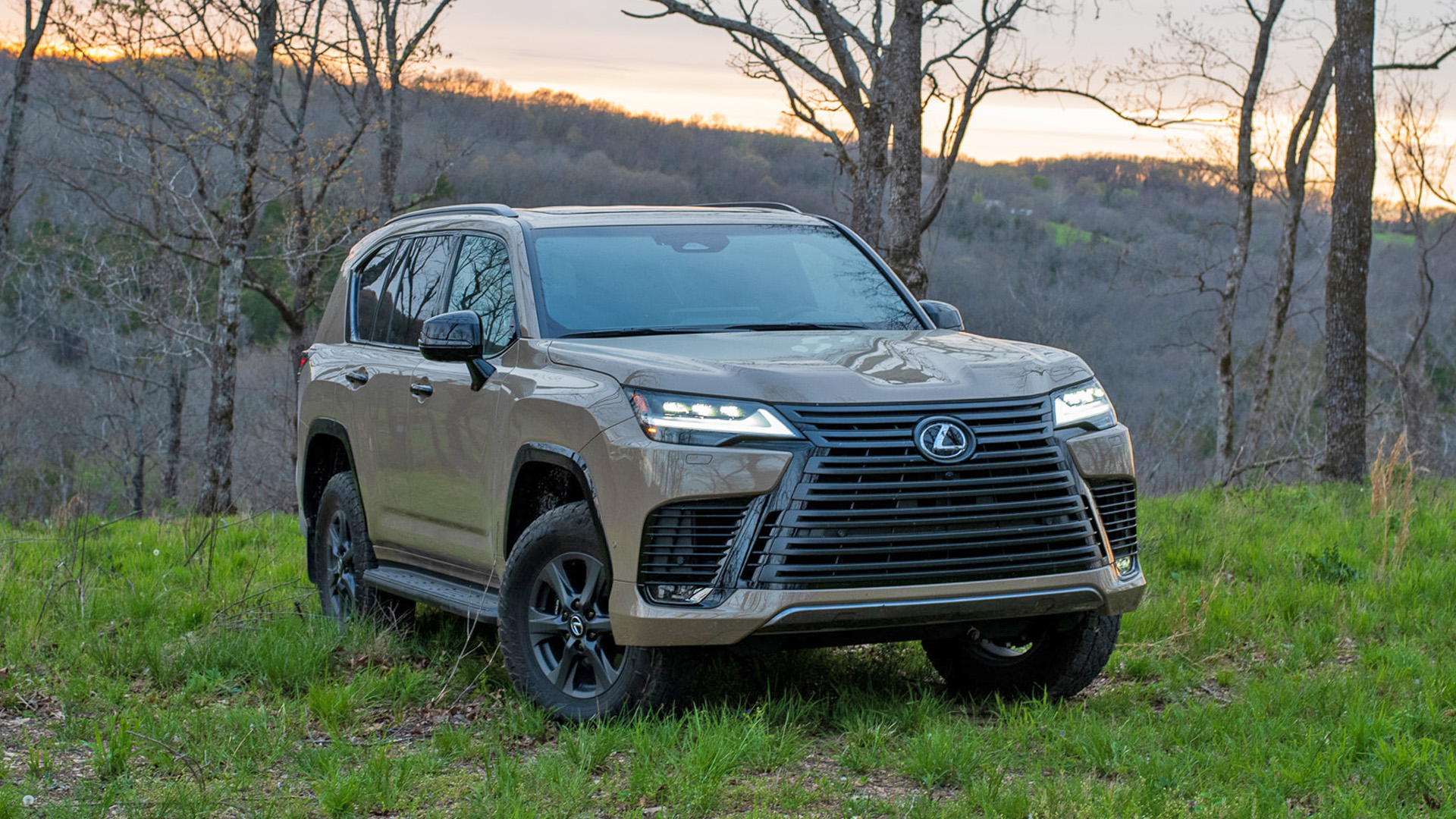
2025 Lexus LX 700h Overtrail Review: They Paywalled the Real Land Cruiser
The Land Cruiser that Toyota sells stateside isn't the real deal, but this off-road LX comes close—for a price.
 www.thedrive.com
mikeavelli
Moderator
- Messages
- 7,528
- Reactions
- 16,727
I see there's been some confusion on what exactly differs between Tundra/Sequoia's iForce Max and LX700h version.
This is the diagram for iForce Max on the Tundra/Sequoia I got from toyota-club.net. If the HV battery fails, the 12V can crank the starter and run the engine. The engine can still drive MG1 and keep the 12V system powered through the AC-DC-DC converter. It is already more robust than vast majority of the hybrids on the market (including Toyota's own), which all require a functioning HVB to start at all.
The LX700h adds an alternator so the 12V system can be completely isolated from the HV circuit. The difference is it can not only survive a HVB failure, but also MG1 AND inverter failure. It's very very rare to have all components on the HV circuit fail, since that usually means severe damage to other parts that can completely write off the vehicle. A HVB failure is the worst case scenario for most users. Apparently Lexus thinks it's necessary to have extra peace of mind for its customers. My guess is some "VIP" need it to run after surviving gunfights, which is not an uncommon scenario for LX's most hardcore customers.
View attachment 10223
My GS 450h battery died right around 100k miles and the car was toast. Christmas lights on the dash lol. Lexus was kind enough to replace it. This might be 2010 or 2011. I remember my friend the tech yelling the battery was like 300lbs and a pita to replace.
LX 700h is the apocalypse SUV.. might need it the way the world is going lol
-
This site uses cookies to help personalise content, tailor your experience and to keep you logged in if you register.
By continuing to use this site, you are consenting to our use of cookies.