
You are using an out of date browser. It may not display this or other websites correctly.
You should upgrade or use an alternative browser.
You should upgrade or use an alternative browser.
Toyota Land Cruiser Prado/250 Series Discussion
- Thread starter TexasFunRunner
- Start date

F1 Silver Arrows
Expert
- Messages
- 2,578
- Reactions
- 4,181
Downsizing was not about fuel consumption, but emissions. The 2UR lost 12PS to comply with Euro 6, but should lose a LOT more with Euro 7. Ford lost a whopping 110PS on their Ecoboost 3.0 for Euro 7.
I'm aware, in fact I remember that was exactly the reason why the Highlander went from a V6 to a turbocharged 4-cylinder. However the issue is that Toyota is languishing in every other department that isn't just tailpipe emissions, which wasn't even that bad in the first place.
I honestly wished Toyota updated the 4.0L 1GR-FE and 5.7L 3UR-FE and give them the FSE treament, instead of ditching them for these 2 downsized turbocharged engines, the 2.4L turbo T24A and the V35A that have been kinda not that spectacular both in terms of performance and fuel efficiency. Both the 1GR and 3UR in their current FE form should have a ton of room left for performance and efficiency improvements based on what we have seen from other Toyota FE engines that got updated FSE versions with D4-S, higher static compression ratio, wide-angle VVT-i intake cam sprocket that enables the switch between Atkinson and Otto cycle and more efficient cylinder head designs.
I would’ve liked to see Toyota switch to the 5.0 in the Tundra. The 5.7 is a great engine, but is also know for being thirsty. I think Toyota could’ve updated the 5.0 to have just as much torque as the 5.7, and combined with a 10 spd, would’ve had quite a bit better MPG.
I wish there were an updated version of the 4.0 as well. I do think the 2.4T is going to be a good engine, but it is barely in production and already is behind the competition in terms of hp. The new Chevy Travers has a 2.5T that puts out 315ish hp. The 2.7 in their BOF lineup makes a bit more…and these numbers are without electrification.
In hindsight, I wonder why Toyota didn’t make a family of I6 engines rather than the V35 and 8GR. They could’ve streamlined their production process by creating a family of 3,4, and 6 cylinder engines that share common components. The A25 could’ve gained two cylinders and become a 3.75 (call it a 3.8) NA I6 for use in Tacoma, 4Runner, 250/70 series Land Cruisers. The M20 could’ve gained two cylinders to become a 3.0 I6 to use in hybrid rear drive applications (LS, Crown, etc). The T24 could’ve gained two cylinders to become a 3.6 TT I6 to be used in the Tundra/Land Cruiser/LX/GX/LS. Maybe a TT version of the 3.0 for the IS/GR Tacoma/TX/Grand Highlander (assuming the GH/TX were moved to rear drive platforms).
All this makes me wonder if Toyota planned on ditching the V8 when the V35 was given the green light. If Toyota had known the V35 was going to replace the V8s and most transverse applications were going to lose the V6, then why not creat an I6 instead and share parts with the I4?
Things I wonder…lol.
Definitely a possibility.I would’ve liked to see Toyota switch to the 5.0 in the Tundra. The 5.7 is a great engine, but is also know for being thirsty. I think Toyota could’ve updated the 5.0 to have just as much torque as the 5.7, and combined with a 10 spd, would’ve had quite a bit better MPG.
I wish there were an updated version of the 4.0 as well. I do think the 2.4T is going to be a good engine, but it is barely in production and already is behind the competition in terms of hp. The new Chevy Travers has a 2.5T that puts out 315ish hp. The 2.7 in their BOF lineup makes a bit more…and these numbers are without electrification.
In hindsight, I wonder why Toyota didn’t make a family of I6 engines rather than the V35 and 8GR. They could’ve streamlined their production process by creating a family of 3,4, and 6 cylinder engines that share common components. The A25 could’ve gained two cylinders and become a 3.75 (call it a 3.8) NA I6 for use in Tacoma, 4Runner, 250/70 series Land Cruisers. The M20 could’ve gained two cylinders to become a 3.0 I6 to use in hybrid rear drive applications (LS, Crown, etc). The T24 could’ve gained two cylinders to become a 3.6 TT I6 to be used in the Tundra/Land Cruiser/LX/GX/LS. Maybe a TT version of the 3.0 for the IS/GR Tacoma/TX/Grand Highlander (assuming the GH/TX were moved to rear drive platforms).
All this makes me wonder if Toyota planned on ditching the V8 when the V35 was given the green light. If Toyota had known the V35 was going to replace the V8s and most transverse applications were going to lose the V6, then why not creat an I6 instead and share parts with the I4?
Things I wonder…lol.

qtb007
Admirer
- Messages
- 537
- Reactions
- 816
Anecdote time: I've driven a hilly, 300mi round trip route in the Highlander with both the T24 and the 2GR-FKS. The T24 got 30mpg on the trip; the 2GR was 27mpg. The A25 hybrid on the same route is around 35mpg.For example, the T24A-FTS is barely more fuel efficient than the aging 2GR-FKS which everyone lamented how much it was drinking gas, even though when it came out, it was a legend in terms of engine efficiency and power.
I don't love the NVH of the A25, but that's still what I'd choose especially when the 2GR dips down around 22mpg in city cycle and the A25 remains in the mid 30s. The T24 is a much torquier engine than the 2GR.

TexasFunRunner
Fan
- Messages
- 26
- Reactions
- 59
Why is the NVH worst on the A25, the extra weight of the batteries?Anecdote time: I've driven a hilly, 300mi round trip route in the Highlander with both the T24 and the 2GR-FKS. The T24 got 30mpg on the trip; the 2GR was 27mpg. The A25 hybrid on the same route is around 35mpg.
I don't love the NVH of the A25, but that's still what I'd choose especially when the 2GR dips down around 22mpg in city cycle and the A25 remains in the mid 30s. The T24 is a much torquier engine than the 2GR.
qtb007
Admirer
- Messages
- 537
- Reactions
- 816
Chassis NVH is the same. It's just the engine itself. The A24 revs to high RPM frequently and is somewhat coarse sounding. Driven normally, the turbo engine and the V6 basically never rev over 3500RPM. The A25 will regularly rev high in the band for pretty normal acceleration or pulling a hill. They hybrid transmission is considerably smoother than the 8 speed, though. The shift shock isn't bad in the 8 speed, but it doesn't seamlessly transition on a downshift like the hybrid does.Why is the NVH worst on the A25, the extra weight of the batteries?
Last edited:
This.
The reason why BMW has the stupidly efficient B58 is because they employ a lot of ECU and engine management trickery. A regular inline-six making those power figures has no business being this frugal on gas. So to me it looks like they may have went to some extremes in tuning this engine. Although it looks like the gamble paid off because these engines are reliable across the board even with the Jekyll and Hyde nature of the B58, from the insane power they make to it being extremely efficient.
It seems that Toyota/Lexus is slacking off with regard to innovative engine technology. They're just downsizing and adding huge electric motors which doesn't seem to do the job. For example, the T24A-FTS is barely more fuel efficient than the aging 2GR-FKS which everyone lamented how much it was drinking gas, even though when it came out, it was a legend in terms of engine efficiency and power.
I'm starting to see signs that the EV hype is beginning to wane from the manufacturer side and the consumer side, to me it's sensible to develop a new family of six and eight cylinder engines that are reliable, efficient, and powerful.
Toyota and Lexus need to go back to the drawing board.
Wishful thinking. The heyday of leading edge 6/8 cylinder powertrains at Toyota/Lexus are a thing of the past.
The only reason any car maker still make V6s today is compactness. If they don't take advantage of that then it offers no benefit over I6 which is cheaper to make. The whole industry is moving towards I6 to reduce cost.
The original purpose of V35 was to make a very compact and light engine with great power density. It weighs about the same as most 3.0T engines but makes 15% more power and torque. Very good engine on paper.
So logically this compactness should make it fit easily in a wide variety of products, like a compact sedan, like a FMR light sports car, like a mid-size pickup truck or SUV. Things their competitors do to take advantage of their V6s. But instead, Toyota put the engine into two applications that care the least about packaging, a full size sedan and full-size truck.
The original purpose of V35 was to make a very compact and light engine with great power density. It weighs about the same as most 3.0T engines but makes 15% more power and torque. Very good engine on paper.
So logically this compactness should make it fit easily in a wide variety of products, like a compact sedan, like a FMR light sports car, like a mid-size pickup truck or SUV. Things their competitors do to take advantage of their V6s. But instead, Toyota put the engine into two applications that care the least about packaging, a full size sedan and full-size truck.

Gecko
Administrator
- Messages
- 5,156
- Reactions
- 12,684
The only reason any car maker still make V6s today is compactness. If they don't take advantage of that then it offers no benefit over I6 which is cheaper to make. The whole industry is moving towards I6 to reduce cost.
The original purpose of V35 was to make a very compact and light engine with great power density. It weighs about the same as most 3.0T engines but makes 15% more power and torque. Very good engine on paper.
So logically this compactness should make it fit easily in a wide variety of products, like a compact sedan, like a FMR light sports car, like a mid-size pickup truck or SUV. Things their competitors do to take advantage of their V6s. But instead, Toyota put the engine into two applications that care the least about packaging, a full size sedan and full-size truck.
Well said and I think this is one of Toyota's greatest blunders in the last decade or so.
Toyota (Japan) expected the V35A-FTS to be a worthy V8 replacement and the T24A-FTS to be a strong V6 replacement, and those were very poor miscalculations. TMNA wanted stronger motors (especially V8s), but Japan won that argument and we know the Japanese are far more conservative. Worse is that the tunes of these engines don't seem particularly strong but also don't return class-leading MPG either.
Similar for Lexus with Mercedes, BMW and Audi, or Toyota with Ford, Dodge and Chevy, the market expectation for halo and flagship vehicles is 500 to 700hp with V8s or electricity or both. Toyota nor Lexus have anything to offer for any of those options.
Tundra, Sequoia, LS, LX, LC, GX, and RC all need new V8s to be competitive or capitalize on market trends just like Tacoma, 4Runner, Land Cruiser, Grand Highlander, ES, RC, IS, RX, TX all need TT V6.
Based on the engine chart that was provided with the TNGA rollout, it certainly looked like Toyota had plans for more 6 and 8 cylinder engines, but where are they? Japan cut them? Dealers from both brands could have been printing money for the last 3 years with new V8s and better V6s. So many of these product decisions seem misaligned...
F1 Silver Arrows
Expert
- Messages
- 2,578
- Reactions
- 4,181
Looks like Japan needs another slap in the face.Well said and I think this is one of Toyota's greatest blunders in the last decade or so.
Toyota (Japan) expected the V35A-FTS to be a worthy V8 replacement and the T24A-FTS to be a strong V6 replacement, and those were very poor miscalculations. TMNA wanted stronger motors (especially V8s), but Japan won that argument and we know the Japanese are far more conservative. Worse is that the tunes of these engines don't seem particularly strong but also don't return class-leading MPG either.
Similar for Lexus with Mercedes, BMW and Audi, or Toyota with Ford, Dodge and Chevy, the market expectation for halo and flagship vehicles is 500 to 700hp with V8s or electricity or both. Toyota nor Lexus have anything to offer for any of those options.
Tundra, Sequoia, LS, LX, LC, GX, and RC all need new V8s to be competitive or capitalize on market trends just like Tacoma, 4Runner, Land Cruiser, Grand Highlander, ES, RC, IS, RX, TX all need TT V6.
Based on the engine chart that was provided with the TNGA rollout, it certainly looked like Toyota had plans for more 6 and 8 cylinder engines, but where are they? Japan cut them? Dealers from both brands could have been printing money for the last 3 years with new V8s and better V6s. So many of these product decisions seem misaligned...
Last time around it worked when it came to good driving cars and building sports cars. Who's to say people and executives can't force that change again?
F1 Silver Arrows
Expert
- Messages
- 2,578
- Reactions
- 4,181
Interesting......Anecdote time: I've driven a hilly, 300mi round trip route in the Highlander with both the T24 and the 2GR-FKS. The T24 got 30mpg on the trip; the 2GR was 27mpg. The A25 hybrid on the same route is around 35mpg.
I don't love the NVH of the A25, but that's still what I'd choose especially when the 2GR dips down around 22mpg in city cycle and the A25 remains in the mid 30s. The T24 is a much torquier engine than the 2GR.
To me the biggest blunder was developing the transverse 500h powertrain when it delivered on none of the promised advantages they claimed. Toyota simply had no experience with P2 hybrids and they gave up 16 years of evolution of the tried and true V6 PS hybrid system from the original RX400h. This is them trying to reinvent the wheel. Pure waste of engineering effort and budget with not much future growth potential (because they are hard limited by the torque capacity of the transmission unlike the BOF iForce Max version).
So now they have an overcomplicated expensive to make RX500h that is both slower and less efficient and less smooth than its 48V MHEV competitors. The MHEV X5 is just superior in every way.
And they were supposed to keep the V6 power split hybrid anyway for the TX and Century. So now they lose the economies of scale on that powertrain as well.
So now they have an overcomplicated expensive to make RX500h that is both slower and less efficient and less smooth than its 48V MHEV competitors. The MHEV X5 is just superior in every way.
And they were supposed to keep the V6 power split hybrid anyway for the TX and Century. So now they lose the economies of scale on that powertrain as well.
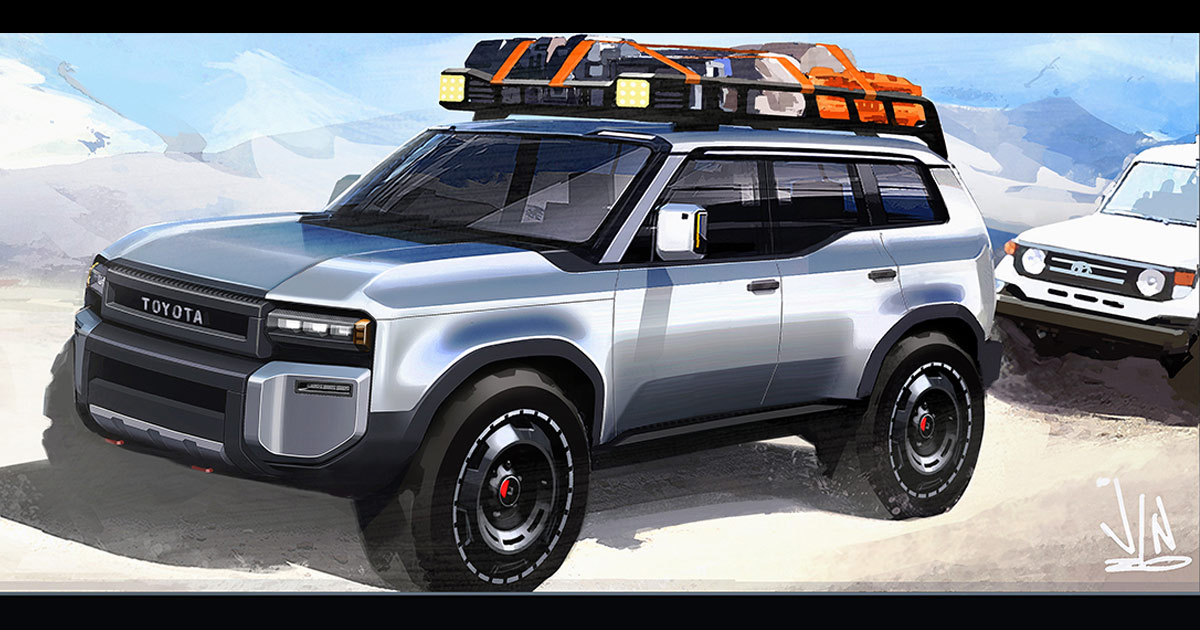
ランドクルーザー"250" デザインスケッチ | トヨタデザイン | トヨタブランド | モビリティ | トヨタ自動車株式会社 公式企業サイト
新型ランドクルーザー"250"のデザインスケッチをご紹介します。伝統とモダンを融合しながら、Reliability(信頼性)、Timeless(永く愛せる)、Professional(プロが使う洗練された機能美)をキーワードにデザインをしました。
qtb007
Admirer
- Messages
- 537
- Reactions
- 816
That 27mpg did sound too good to be true.Toyota has removed the little snippet about the Land Cruiser getting 27mpg from its website. It seems either that information was prematurely released, or it may not be accurate.
I agree with what you said, but Toyota wouldn't be able to do that. They ditched their 3.5L V6 for a turbo 4, so keeping a bigger V6 like the 1GR and 3UR would be hard for emissions. I'll say Toyota could've gone another route with making a smaller turbo V6 from the V35A (~2.7L V6) that could've gone into the smaller trucks and cars (TX,RX,ES).I honestly wished Toyota updated the 4.0L 1GR-FE and 5.7L 3UR-FE and give them the FSE treament, instead of ditching them for these 2 downsized turbocharged engines, the 2.4L turbo T24A and the V35A that have been kinda not that spectacular both in terms of performance and fuel efficiency. Both the 1GR and 3UR in their current FE form should have a ton of room left for performance and efficiency improvements based on what we have seen from other Toyota FE engines that got updated FSE versions with D4-S, higher static compression ratio, wide-angle VVT-i intake cam sprocket that enables the switch between Atkinson and Otto cycle and more efficient cylinder head designs.
I agree with what you said, but Toyota wouldn't be able to do that. They ditched their 3.5L V6 for a turbo 4, so keeping a bigger V6 like the 1GR and 3UR would be hard for emissions. I'll say Toyota could've gone another route with making a smaller turbo V6 from the V35A (~2.7L V6) that could've gone into the smaller trucks and cars (TX,RX,ES).
I think a 2.7-2.8 turbo V6 would be very nice in the lineup, and it’s something I’ve mentioned here before. Such posts typically get shot down with comments about the T24 and T24 hybrid being good enough though.
A smaller V6 based on the V35 block is not going to cost less to build and just adds another set of tooling to maintain. It's much easier to detune the V35 to run on very low boost and 91RON fuel. The V35 detuned to ~320PS and 500N.m could have very good drivability, efficiency and reliability while complying with Euro 7. It's already small and light enough to readily replace 2GR in every application.I agree with what you said, but Toyota wouldn't be able to do that. They ditched their 3.5L V6 for a turbo 4, so keeping a bigger V6 like the 1GR and 3UR would be hard for emissions. I'll say Toyota could've gone another route with making a smaller turbo V6 from the V35A (~2.7L V6) that could've gone into the smaller trucks and cars (TX,RX,ES).
But we know Toyota did not become the biggest car company and have 12.4% net margins by offering generous powertrains... If you are not content with "good enough" you should give other brands a chance.
-
This site uses cookies to help personalise content, tailor your experience and to keep you logged in if you register.
By continuing to use this site, you are consenting to our use of cookies.