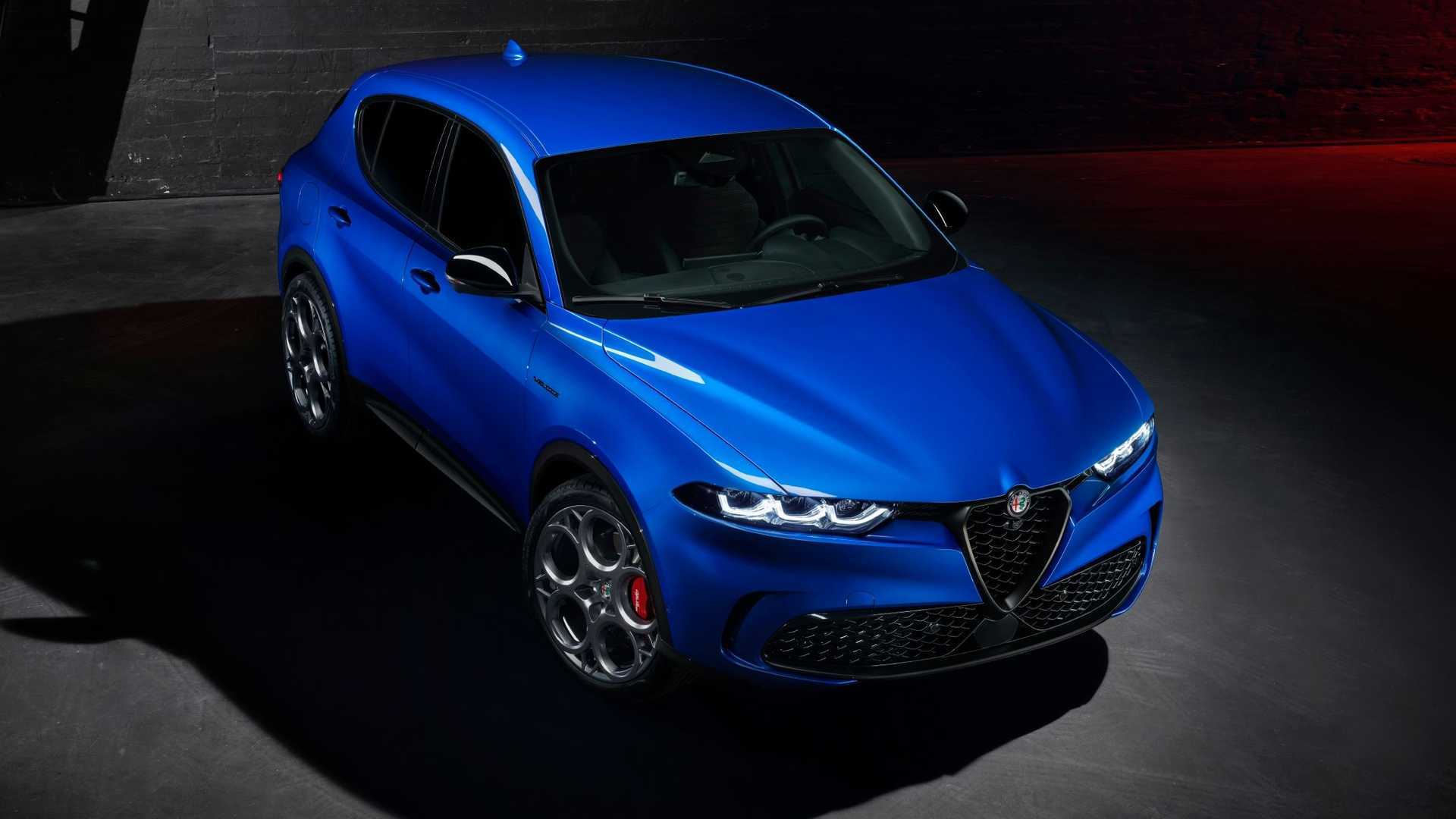
Alfa Romeo Sets Lexus As Quality Benchmark For New Products
While BMW has been the overall benchmark for Alfa Romeo in the Stellantis era, Alfa Romeo CEO Jean-Philippe Imparato says Lexus is now the quality benchmark.
It is closer to 40 years than 30 years. The GM-Toyota joint venture NUMMI plant opened in 1984. GM hoped to learn Toyota's secret sauce to building high-quality small cars.American car makers have been trying to replicate TMC quality since 1990?
Good luck with that.
Building high-quality cars cannot just be done on the final assembly line; it must be a vertically-oriented activity, from bottom to top, and beginning to end. It has to involve the suppliers. This is where the western world automakers miss out; they still have not come to good terms with their suppliers.It's not hard to build Toyota quality cars - you just dial up the rejection threshold. The hard part is doing it economically. I actually expect Alfa Romeo to achieve Lexus quality, and then go bankrupt and axed by FCA in a year or two. Toyota quality does not just happen in the plant. It's built into the entire supply chain.
I once entertained the idea of getting into business with Toyota's supply chain. A business partner at Geely said "don't think about it".Building high-quality cars cannot just be done on the final assembly line; it must be a vertically-oriented activity, from bottom to top, and beginning to end. It has to involve the suppliers. This is where the western world automakers miss out; they still have not come to good terms with their suppliers.
The Japanese automakers follow American Dr. W. Edwards Deming and his 14 points for total quality management (they consider Dr. Deming to be the father of quality). The 4th point states "End the practice of awarding business on the basis of price tag. Instead, minimize total cost. Move toward a single supplier for any one item, on a long-term relationship of loyalty and trust". The Japanese automakers have learned to work closely with their suppliers rather than playing one off against another to get the lowest cost. The western automakers still go shopping for lowest cost which may actually work out to cost more in the long run.
I thought they just buy out their suppliers or have a significant partner stake to basically internally control the company without slapping a Toyota badge on the front door?Building high-quality cars cannot just be done on the final assembly line; it must be a vertically-oriented activity, from bottom to top, and beginning to end. It has to involve the suppliers. This is where the western world automakers miss out; they still have not come to good terms with their suppliers.
The Japanese automakers follow American Dr. W. Edwards Deming and his 14 points for total quality management (they consider Dr. Deming to be the father of quality). The 4th point states "End the practice of awarding business on the basis of price tag. Instead, minimize total cost. Move toward a single supplier for any one item, on a long-term relationship of loyalty and trust". The Japanese automakers have learned to work closely with their suppliers rather than playing one off against another to get the lowest cost. The western automakers still go shopping for lowest cost which may actually work out to cost more in the long run.
Yes, like what GM did with those bad ignition switches. In order to save a few cents on each one, GM bought substandard ones from suppliers.There's no secret sauce to building high quality cars lol, maybe if some of these car manufacturers aren't so obsessed with cutting corners their products won't have such crap quality.
Stellantis already produces electric light commercial vehicles (LCV), and Toyota already sells badge-engineered versions of Stellantis' compact and mid-size vans, in both ICE and EV variants. In this new agreement, Stellantis will provide Toyota with a large electrified van (a variant of the Ram ProMaster Cargo Van / Fiat Ducato) for sale in Europe.interestingly parent company Stellantis is expanding their TMC ties for a LCV?
Stellantis and Toyota Motor Europe announced a new agreement on large-size commercial vans (conventional and electric) for the European market, which essentially is an expansion of the existing partnership on compact and mid-size vans.
Under the agreement, Stellantis will supply Toyota with the new large-size commercial van for sale in Europe under the Toyota brand, just like in the case of compact- and mid-size models (respectively: Toyota Proace since 2012 and Toyota Proace City since 2019).
Nothing is known about the new large-size van (ICE and BEV), scheduled for market launch in mid-2024, besides two confirmed Stellantis manufacturing locations: Gliwice, Poland and Atessa, Italy.
The move is pretty important also for Stellantis, which developed two different solutions (Fiat E-Ducato vs Peugeot e-Boxer/Citroen e-Jumper/Opel Movano/Vauxhall Movano) before FCA merged with PSA. The large-size van has to be consolidated into the next-generation unified model for the entire group to make business sense.