Gecko

Administrator
Messages
5,139
Reactions
12,580


After launching in 2008, Lexus’ performance F brand appears to be finished


With four one-and-done models and no successive generations, and a lineup mostly crossovers and SUVs, there is no logical continuation of F cars


The Gazoo Racing (GR) performance brand could replace F as Lexus’ performance moniker in the future


There hasn’t been an official announcement from Lexus, no press release declaring the end of an era, no commemorative video montage set to melancholic piano music. But make no mistake: the F brand is dead, and the RC F Final Edition rolling off the assembly line this year has been its headstone.
The pattern has been consistent to the point of being mathematical: Every Lexus F model — the IS F, the legendary LFA, the GS F, and now the RC F — has been a one-and-done...

Continue reading...
 
Last edited:

ssun30

Expert
Messages
3,844
Reactions
8,536
"When you've been making money lying down for too long, you forget how to make money standing up".

The demise of the F line actually coincided with a "Second Renaissance" of Lexus, despite what enthusiasts would call a "Lost Decade". The 2010s was a period where Lexus transitioned from going toe to toe with European brands, to avoiding direct competition and increasing volume and profit in the easiest way possible. The 2016-2020 "Alphard Bubble" in the Chinese market was what made Lexus realize this strategy. Toyota found a completely empty market segment and established a near monopoly and was able to charge exorbitant prices, and later doubled down with the LM that could be argued to be the single most profitable automotive product in history (with a per-unit margin of well over 200%). The ES grew from mid-size to full-size because that's easy to do on a transverse FWD platform, with even more space than the flagship LS - this allowed them to easily undercut the 5-series/E-class and establish the ES as one of the best selling luxury sedan globally. If you just look at the figures, Lexus has never been this strong.

But as the saying goes "what goes up must come down". This lazy competition strategy ended up costing Lexus in the early 2020s when they found out they have no competitive product in China anymore, and have to engage in a very costly price war just to maintain their presence in one market. And the market size is large enough for them to not just abandon it (like Acura and Infiniti did), so they have to commit even more. Now they are basically betting everything will be alright once their Shanghai factory was built, and go back to their pre-COVID sales figures by selling 5-year-obsolete BEVs, good luck with that.

Lexus was lucky that their competitors also made mistakes, much bigger mistakes. Most European brands went all-in on full BEV plans and we all know how well that worked out. They invested almost no R&D to full hybrids and wasted all their effort on ineffective mild hybrids. Mercedes reacted very slowly to the LM despite decades of V-class VIP conversion market in many parts of the world. But among them, BMW stood out because they stuck to their core brand identity despite their questionable design language. The death of the F brand exposed the biggest real weakness of Lexus as a brand: they don't really know what kind of brand they want to be, instead just going for whatever market segment that makes the most money.

What I think could salvage the F brand name is going for the BOF market similar to how TRD transformed. The G63 AMG is probably the best-selling "full AMG" (not counting "AMG-lite" models like C43) model because it caters to some very rich clients with a specific taste for BOF products. Till this day Lexus still refuses to compete against the G-wagen and RR which I think is a big missed opportunity. The GX and LX are more popular than ever, so instead of an easily forgettable generic name like "Overtrail", why not expand the two to a F lineup like the TRD lineup? I'm almost certain a LX with the 4.0TT V8 will easily sell 10 times the volume of the GR GT without requiring expensive R&D.
 
Messages
21
Reactions
5
"When you've been making money lying down for too long, you forget how to make money standing up".

The demise of the F line actually coincided with a "Second Renaissance" of Lexus, despite what enthusiasts would call a "Lost Decade". The 2010s was a period where Lexus transitioned from going toe to toe with European brands, to avoiding direct competition and increasing volume and profit in the easiest way possible. The 2016-2020 "Alphard Bubble" in the Chinese market was what made Lexus realize this strategy. Toyota found a completely empty market segment and established a near monopoly and was able to charge exorbitant prices, and later doubled down with the LM that could be argued to be the single most profitable automotive product in history (with a per-unit margin of well over 200%). The ES grew from mid-size to full-size because that's easy to do on a transverse FWD platform, with even more space than the flagship LS - this allowed them to easily undercut the 5-series/E-class and establish the ES as one of the best selling luxury sedan globally. If you just look at the figures, Lexus has never been this strong.

But as the saying goes "what goes up must come down". This lazy competition strategy ended up costing Lexus in the early 2020s when they found out they have no competitive product in China anymore, and have to engage in a very costly price war just to maintain their presence in one market. And the market size is large enough for them to not just abandon it (like Acura and Infiniti did), so they have to commit even more. Now they are basically betting everything will be alright once their Shanghai factory was built, and go back to their pre-COVID sales figures by selling 5-year-obsolete BEVs, good luck with that.

Lexus was lucky that their competitors also made mistakes, much bigger mistakes. Most European brands went all-in on full BEV plans and we all know how well that worked out. They invested almost no R&D to full hybrids and wasted all their effort on ineffective mild hybrids. Mercedes reacted very slowly to the LM despite decades of V-class VIP conversion market in many parts of the world. But among them, BMW stood out because they stuck to their core brand identity despite their questionable design language. The death of the F brand exposed the biggest real weakness of Lexus as a brand: they don't really know what kind of brand they want to be, instead just going for whatever market segment that makes the most money.

What I think could salvage the F brand name is going for the BOF market similar to how TRD transformed. The G63 AMG is probably the best-selling "full AMG" (not counting "AMG-lite" models like C43) model because it caters to some very rich clients with a specific taste for BOF products. Till this day Lexus still refuses to compete against the G-wagen and RR which I think is a big missed opportunity. The GX and LX are more popular than ever, so instead of an easily forgettable generic name like "Overtrail", why not expand the two to a F lineup like the TRD lineup? I'm almost certain a LX with the 4.0TT V8 will easily sell 10 times the volume of the GR GT without requiring expensive R&D.
Well stated! Time for a new brand.
 

Gecko

Administrator
Messages
5,139
Reactions
12,580
"When you've been making money lying down for too long, you forget how to make money standing up".

The demise of the F line actually coincided with a "Second Renaissance" of Lexus, despite what enthusiasts would call a "Lost Decade". The 2010s was a period where Lexus transitioned from going toe to toe with European brands, to avoiding direct competition and increasing volume and profit in the easiest way possible. The 2016-2020 "Alphard Bubble" in the Chinese market was what made Lexus realize this strategy. Toyota found a completely empty market segment and established a near monopoly and was able to charge exorbitant prices, and later doubled down with the LM that could be argued to be the single most profitable automotive product in history (with a per-unit margin of well over 200%). The ES grew from mid-size to full-size because that's easy to do on a transverse FWD platform, with even more space than the flagship LS - this allowed them to easily undercut the 5-series/E-class and establish the ES as one of the best selling luxury sedan globally. If you just look at the figures, Lexus has never been this strong.

But as the saying goes "what goes up must come down". This lazy competition strategy ended up costing Lexus in the early 2020s when they found out they have no competitive product in China anymore, and have to engage in a very costly price war just to maintain their presence in one market. And the market size is large enough for them to not just abandon it (like Acura and Infiniti did), so they have to commit even more. Now they are basically betting everything will be alright once their Shanghai factory was built, and go back to their pre-COVID sales figures by selling 5-year-obsolete BEVs, good luck with that.

Lexus was lucky that their competitors also made mistakes, much bigger mistakes. Most European brands went all-in on full BEV plans and we all know how well that worked out. They invested almost no R&D to full hybrids and wasted all their effort on ineffective mild hybrids. Mercedes reacted very slowly to the LM despite decades of V-class VIP conversion market in many parts of the world. But among them, BMW stood out because they stuck to their core brand identity despite their questionable design language. The death of the F brand exposed the biggest real weakness of Lexus as a brand: they don't really know what kind of brand they want to be, instead just going for whatever market segment that makes the most money.

What I think could salvage the F brand name is going for the BOF market similar to how TRD transformed. The G63 AMG is probably the best-selling "full AMG" (not counting "AMG-lite" models like C43) model because it caters to some very rich clients with a specific taste for BOF products. Till this day Lexus still refuses to compete against the G-wagen and RR which I think is a big missed opportunity. The GX and LX are more popular than ever, so instead of an easily forgettable generic name like "Overtrail", why not expand the two to a F lineup like the TRD lineup? I'm almost certain a LX with the 4.0TT V8 will easily sell 10 times the volume of the GR GT without requiring expensive R&D.

Great post. I think the conversation around what enthusiasts want (passion products) vs. the business case (rebadged Toyota SUVs) is always a tough one, but I also look at it as a chicken or egg scenario too. Lexus has stopped innovating and trying to build great cars, but they have the privilege of being a top luxury brand who can do that because they earned it for 20+ years with products like IS, GS, LS, SC, RC, and LC. Those have always been the products that drive passion for the brand, and then those same people who lust after them choose an NX for their daughter, or an RX for their wife, an ES for their mother, or an LX when they're able. NX/RX/ES have been the core of Lexus, but IS/GS/LS/coupes have always been the passion and the heart. What is a premium brand without passion?

Losing GS - sure, I won't fight that battle considering their decisions with the ES and the market's turn away from passenger cars, and I thought the 7th gen ES was a pretty solid car. If Lexus cancelled the 4GS earlier and in turn engineered a legitimate ES 350 or ES 350h AWD, it would have made for a compelling midsize sedan that made the GS irrelevant. I think many of us were hoping Lexus would have taken a more "Audi A6" approach with the 8ES now that the GS is fully gone, but like the 5LS, what they've done is yet another car made for nobody: unattractive exterior, plain and barren interior, weak EV specs, awkward packaging, and increased price. I hear Lexus USA is already collecting product feedback and hoping for an early refresh to fix some of these problems.

... but losing F, LS, IS, RC, and next LC? Time for us to stop bashing Acura and Infiniti because Lexus will very soon be just the same. It is a brand with no soul and that is great at nothing. I think there will be negative sales impacts 4-5 years from now when products like F, IS, LS, RC, and LC are distant memories and the only thing Lexus sells is basic transportation with leather surfaces. Toyota+. Toyota, Hyundai, Kia, and other mainstream brands are already building crossovers with better specs and features than Lexus, Cadillac is becoming dominant with EVs, and the Germans will always appeal to shoppers wanting and willing to pay for "more." Lexus has even historically been able to sell uncompetitive cars on paper because they are good looking - IS, ES, RX, GX - but this new generation of products like ES, RZ, RX, and TX are awkward or downright ugly. What will happen when Lexus is good at absolutely nothing and the lineup is so bland or ugly with no passion products to make people excited?

Your point about Lexus' brand identity is one I have thought about a lot, especially because it is now the third and final Japanese luxury brand to fall from grace. Was the original LS just Toyota wanting to prove they could build a better Mercedes for half the price? Maybe. I think cars like Altezza/IS, Soarer/SC, and Aristo/GS were some of Japan's best work for premium automotive products but outside of that, what really is Japanese about Lexus' heritage or approach? I think Japan's conservative culture has been to blame for much of Acura's, Infiniti's, and Lexus' problems but I also don't think it's an excuse. LS was always Japan's S-Class. RX became a runaway success because they Lexus-ified a Camry platform and uncovered a niche in the market nobody else covered. While their paths haven't been linear, BBA have been clear in their conviction and brand direction. Lexus, Acura, and Infiniti made a series of market plays but seemingly without a connected strategy or brand identity. LS, SC, LFA, RX, F brand, LC, NSX, TL Type S, Q45, G35, and G35 Coupe. A collection of greatest hits but no standout albums and no signature sound.

My day job is in brand/demand marketing so I see things like this happen a lot: a brand or a company gets a hit or two under their belt and they run towards short term success, back and forth, almost in a zig-zag pattern bouncing between ideas but never chasing clarity or staying true to an identity or brand ethos. Change is good and nothing will be perfect, but I think the Japanese brands are victims of this thinking especially as premium "projects" of their mainstream parent companies.

I then think... what is real, Japanese luxury? I do think Lexus has encompassed that at times but there's no denying Lexus' driving force was the American market for 30 years, but now China. I also think the 5LS might be the best example of Japanese luxury with touches like Kiriko glass trim, pleated leather door inserts, and some of the other trims and details they used over the years.

I realize I'm rambling at this point but I've wondered if a big part of Lexus' problem is an identity crisis. Born for America, Japanese heritage, now adapting to China, always taking a back seat to Toyota... what really is Lexus, and how would you define them as a luxury brand? For everything from UX to LFA, RX to LS, IS to LM, I just don't think Lexus really knows who they are so they've become anything... and nothing.

Been thinking about resurrecting the podcast for this discussion because 2025 has been a pivotal year for the brand. Would need folks to discuss this with, so let me know if anyone here is interested.
 

CRSKTN

Expert
Messages
2,398
Reactions
3,995
Passion projects require a brand you take pride in.

Toyota leadership takes no pride in Lexus.
It's purely performative.
They don't care about the brand beyond the dollars it can produce, and making sure it doesn't overshadow the rest of the ecosystem.

You think it's a coincidence they didn't push up market with an established Luxury brand versus trying to force Century on new markets?

Seriously just stop and follow basic logic:
1) Toyota understands upmarket exists and is a good place to be
2) Toyota understands that it has the capacity and economic argument to make halo, highly desirable, super high margin cars
3) Toyota understands marketing and branding, whether with the right mindset and goals aside
4) Toyota understands brand design, loyalty, status, and how it's viewed in different markets
5) Toyota had a luxury brand, Lexus
6) Toyota turns that luxury brand into little more than a vehicle for lazy phone-in rehashes and ridiculous concepts
6.1) Make sure to never properly follow up on your occasional massive success or iconic vehicles that were produced despite Toyota, not because of it
7) Toyota cannibalizes parts of Lexus then atrophies their version while keeping a million one-off ridiculous versions of low-margin mass market vehicles
8) Toyota introduces Century and near Japanese-nationalist messaging.
9) Toyoda comes out as an authoritarian nepo baby egomaniac

Nobody else has as little excuse as Toyota, or does as much to sandbag and half-ass.

It's amazing the damage that overly-lucky, shitty-minded, mediocre men can do.
 
Last edited:

LCLFV

Fan
Messages
33
Reactions
75
There's not much else I can add that has already been said, but one thing that I have to point out is that it's very weird watching Toyota be so... wasteful. This is a company that prided itself on Kaizen and iterative improvement, and yet now we have all these RWD platforms and powertrains that they spent decades developing their cycles of learning on, just to be thrown in the trash. GA-L must have cost a fortune to develop, and yet they used it on a grand total of 4 vehicles, only two of which are for Lexus? And going further back, how about the New N platform for the GS? And even further back, how about the fact that literally nothing of importance mechanically from the LFA was carried onto future Lexus models?

This is why it's utterly baffling to see Lexus be compared to Acura or Infiniti, the former of which is on a shoestring budget and has no real RWD platforms (NSX being a weird exception like the LFA), while the latter still uses RWD platforms dating back to the turn of the millennium. Even broke Mazda put their money where their mouth is and released two RWD-based crossovers with an inline 6 completely in-house. Meanwhile you have Lexus, sinking their money to develop a RWD platform capable of housing a TTV8, yet don't even bother to finish either the TTV8 or the shell of an IS, GS, or any crossover to sit on it?

If all Toyota made this past decade was solely on the GA-K Camry platform and nothing else, at least I could see that they had some kind of plan that they were building to iteratively improve upon. But the fact that they sank their money to develop a RWD platform, a TTV8, hydrogen, and god knows what else that never ended up in anything meaningfully complete makes me wonder if there was some form of internal sabotage. German companies have fired entire subdivisions for less (see the whole CARIAD fiasco at VAG), so how is it that Toyota can burn so much money and have no heads roll, while their CEO goes around dressed as a clown?

The only other company that I can think of that has been this wasteful in throwing away what they have is Jaguar.
 
Last edited:

Gor134

Expert
Messages
1,124
Reactions
1,969
The resistance around RWD Longitudinal platform development is what confuses me about Lexus.

GM just invested 1.25 billion at the Lansing plant for a 2nd gen ICE CT5 on an updated Alpha platform as well as an additional yet unannounced car (Rumours of it being a Camaro Coupe/Sedan or Corvette SUV). Genesis launched with a full RWD Longitudinal platform and has announced to be developing new hybrid versions on this platform. Same thing with the small scale Alfa Romeo brand, there is a new Stelvio and Giulia coming with ICE.

Why can't a brand as big as Lexus/Toyota do this?

I think Japan's conservative culture has been to blame for much of Acura's, Infiniti's, and Lexus' problems but I also don't think it's an excuse.
I think for Acura and Infiniti has more to do with the lack of global product.

For years Acura was rebadged Honda similar to Lexus. We had the "Euro Accord" sold here as the TSX, "Legend" sold as the Acura RL, and JDM Integra sold as the Integra. Once those models disappeared, there isn't much room to develop US-only cars due to the small volume. For some reason they tried with the latest gen TLX and that car was a failure, similar reasons as the LS500.. extremely compromised size with limited interior dimensions despite a large exterior, and uncompetitive powertrain options.

IDK if you recall but Acura planned a RWD-lineup expansion with intent to go into Europe, and this was going to include the V10 NSX, V8 RL, and possibly other sedans and SUVs, which got canned due to economic crisis and they cancelled global expansion plans. Similar thing with Infiniti... they did amazing with RWD products and had a small presence in Europe, but once the product portfolio languished and got old and uncompetitive, they pulled out and there is little business case to develop primarily US-only cars.
 
Last edited:

ssun30

Expert
Messages
3,844
Reactions
8,536
The resistance around RWD Longitudinal platform development is what confuses me about Lexus.
Over the years Toyota engineers have become increasingly bad/lazy at platform packaging. Almost all their TNGA products grew in size without increasing interior space. The GA-L was an incredibly inefficient platform despite not required to house an engine as long as an I6 or V12. The 5LS was as long as 4LS LWB but had less interior space than 4LS SWB. The S220 Crown had less space than S210 Crown/4GS despite being longer than the Crown Majesta. At the same time the CLAR was engineered to fit a V12 in the 7 series that has 15cm more legroom than 5LS with similar length.

The GA-F products grew by about 10cm without more space: the F2 "light duty" platform is now as large as the J200 platform. Even GA-K itself is no more efficient than the older K.

Because of this Lexus has to offer a much bigger/heavier product than competitors to have similar interior space. So they completely gave up on longitudinal to transverse which allows them to be lazy/hide their incompetence. But we see from the Century SUV, even the GA-K is barely more efficient than competitors longitudinal platforms.

I think it's time we admit TMC's engineering teams aren't doing magic. We used to think they have some special sauce that make their cars reliable, now we know that special sauce was just making obsolete cars. They are just average.
 

bogglo

Admirer
Messages
644
Reactions
855
Over the years Toyota engineers have become increasingly bad/lazy at platform packaging. Almost all their TNGA products grew in size without increasing interior space. The GA-L was an incredibly inefficient platform despite not required to house an engine as long as an I6 or V12. The 5LS was as long as 4LS LWB but had less interior space than 4LS SWB. The S220 Crown had less space than S210 Crown/4GS despite being longer than the Crown Majesta. At the same time the CLAR was engineered to fit a V12 in the 7 series that has 15cm more legroom than 5LS with similar length.

The GA-F products grew by about 10cm without more space: the F2 "light duty" platform is now as large as the J200 platform. Even GA-K itself is no more efficient than the older K.

Because of this Lexus has to offer a much bigger/heavier product than competitors to have similar interior space. So they completely gave up on longitudinal to transverse which allows them to be lazy/hide their incompetence. But we see from the Century SUV, even the GA-K is barely more efficient than competitors longitudinal platforms.

I think it's time we admit TMC's engineering teams aren't doing magic. We used to think they have some special sauce that make their cars reliable, now we know that special sauce was just making obsolete cars. They are just average.
Lol damn!! (Kevin Harts voice)

I believe they had the magic and the know how. I think the problem started when they started leaning more towards hybridizing all their vehicles. They stopped putting more effort in building great standalone engines. Also We did not see the problem with the V35 until they put it in vehicles that are actually work mules that means the testing that was used to bring the V35 to the market did not have the likes of the tundra/GX/LX in the plan. It must have been last minute decision.


I Still have slight hope that they will course correct at some point how soon is the question.
 

ssun30

Expert
Messages
3,844
Reactions
8,536
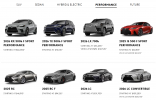
This page is so barren that they now have to label the LX700h as a "performance" product. Next year there will only be the first three plus the RZ550e FSP. Lexus is getting back to mid-2000s level of boring and they are again having a customer age crisis: their average demographic is so old they are buying their last car of their lifetime. This means on average they are not getting a repeated purchase no matter how "well-built" or "reliable" their products are.

Screenshot 2025-11-27 231448.png
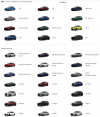
Then you have this:
Screenshot 2025-11-27 231733.png
 
Last edited:

sl0519

Admirer
Messages
689
Reactions
1,293
This page is so barren that they now have to label the LX700h as a "performance" product. Next year there will only be the first three plus the RZ550e FSP. Lexus is getting back to mid-2000s level of boring and they are again having a customer age crisis: their average demographic is so old they are buying their last car of their lifetime. This means on average they are not getting a repeated purchase no matter how "well-built" or "reliable" their products are.

View attachment 10748
Then you have this:
View attachment 10749

This is beyond pathetic. Imagine putting out something this trash in 2025 and still getting smoked by a 13-year-old GS350 F-Sport. If this is “performance,” then M cars are basically rockets at this point. Honestly, seeing them show up with this half-assed, “yeah we give up” energy… yeah, that’s it for me. No more Lexus next time.
 

CRSKTN

Expert
Messages
2,398
Reactions
3,995
Why can't a brand as big as Lexus/Toyota do this?
Nobody at the company is willing to take responsibility.

Let me explain:

1) People who work at Toyota are not car people. They're Japanese people who want to work at Toyota (for the Toyoda family). It's modern feudalism.
2) In Toyota/Lexus, that whole "incremental progress" narrative was just marketing BS. It's because in that organization, single individuals are personally responsible for any idea they come up with that doesn't go perfectly well. Any change to process, or a new approach is a huge risk. Not one people will take after finally getting into the company and into a seat that has a say. As a result, you end up with a lot of "I improved how to screw this thing in" or "look how organized our tool systems are".
3) This is going to sound shallow, but it's a company full of dorks. I really do not want to be judgemental, but the lack of diversity in terms of character is quite telling. Japanese people are not all so consistently meek and timid as Toyota execs and the "chosen ones" are. These things are never coincidences.

Weak people thrust into power, surround themselves with weak, deferential people.

This is what happens when you log jam a company with "yes" people, and put unqualified nepo babies at the helm.

The whole "Japanese executive salaries are so low, they're so humble!" is literally also BS.

They're low for the same reason finance jobs in London don't pay well - Children from well to do families are the only ones who can justify not caring how much they make. It acts as a filter. Regular people who worked hard enough to become executives are unlikely to want to live on a modest salary in a modest apartment when they could be competing for better jobs at other companies, likely abroad.

The title is worth more than the salary to these people.

What we are seeing now, all the terrible platforms, terrible products, dropping quality and rising costs, are a result of this.

Toyota thinks it's strong because it's pulling levers that it has, and it hasn't run out yet, but they're not guaranteed success in China like they had in the USA. Their sales numbers mask deeper issues.
 
Last edited:

bogglo

Admirer
Messages
644
Reactions
855
Nobody at the company is willing to take responsibility.

Let me explain:

1) People who work at Toyota are not car people. They're Japanese people who want to work at Toyota (for the Toyoda family). It's modern feudalism.
2) In Toyota/Lexus, that whole "incremental progress" narrative was just marketing BS. It's because in that organization, single individuals are personally responsible for any idea they come up with that doesn't go perfectly well. Any change to process, or a new approach is a huge risk. Not one people will take after finally getting into the company and into a seat that has a say. As a result, you end up with a lot of "I improved how to screw this thing in" or "look how organized our tool systems are".
3) This is going to sound shallow, but it's a company full of dorks. I really do not want to be judgemental, but the lack of diversity in terms of character is quite telling. Japanese people are not all so consistently meek and timid as Toyota execs and the "chosen ones" are. These things are never coincidences.

Weak people thrust into power, surround themselves with weak, deferential people.

This is what happens when you log jam a company with "yes" people, and put unqualified nepo babies at the helm.

The whole "Japanese executive salaries are so low, they're so humble!" is literally also BS.

They're low for the same reason finance jobs in London don't pay well - Children from well to do families are the only ones who can justify not caring how much they make. It acts as a filter. Regular people who worked hard enough to become executives are unlikely to want to live on a modest salary in a modest apartment when they could be competing for better jobs at other companies, likely abroad.

The title is worth more than the salary to these people.

What we are seeing now, all the terrible platforms, terrible products, dropping quality and rising costs, are a result of this.

Toyota thinks it's strong because it's pulling levers that it has, and it hasn't run out yet, but they're not guaranteed success in China like they had in the USA. Their sales numbers mask deeper issues.
Maybe this is the reality check they will need realising that they can't cater to only China and ignore US.