
You are using an out of date browser. It may not display this or other websites correctly.
You should upgrade or use an alternative browser.
You should upgrade or use an alternative browser.
The Lexus RZ Megathread (550e, 500e 350e)
- Thread starter krew
- Start date
So, if the new Toyota bZ4X and Lexus RZ are not Tesla Model T / L (Toyota / Lexus), that means they will fail?
Who says that all new EVs from any and all automakers, startup or established, must be like Tesla? As an early successful EV-maker, Tesla has successfully catered to the early technology adopters. But Toyota and Lexus EVs, as established automakers with a well-known (to Toyota) and well-established customer base, will be catering not to the early adopters but the late adopters.
Early adopters are willing to accept features that are very different from the established norm, like one-pedal driving; late adapters are (much) less so. I would not be surprised if Toyota's and Lexus' EVs are very similar to their traditional ICE and Hybrid vehicles (and Toyota is on record for saying that they wanted their Hybrids to drive like "normal" cars).
Other than the yolk steering controller (which we may not even get at first here in North America) and the puck-shaped gear selector, the bZ4X and RZ will look and drive like normal Toyota and Lexus vehicles. That will help to attract and sell these vehicles to normal Toyota and Lexus drivers.
Who says that all new EVs from any and all automakers, startup or established, must be like Tesla? As an early successful EV-maker, Tesla has successfully catered to the early technology adopters. But Toyota and Lexus EVs, as established automakers with a well-known (to Toyota) and well-established customer base, will be catering not to the early adopters but the late adopters.
Early adopters are willing to accept features that are very different from the established norm, like one-pedal driving; late adapters are (much) less so. I would not be surprised if Toyota's and Lexus' EVs are very similar to their traditional ICE and Hybrid vehicles (and Toyota is on record for saying that they wanted their Hybrids to drive like "normal" cars).
Other than the yolk steering controller (which we may not even get at first here in North America) and the puck-shaped gear selector, the bZ4X and RZ will look and drive like normal Toyota and Lexus vehicles. That will help to attract and sell these vehicles to normal Toyota and Lexus drivers.

Kelvin2020
Admirer
- Messages
- 867
- Reactions
- 2,017
Is that a leather seat or fabric?
AR-HUD is the most relevant technology going forward. MB and VAG are on the right track here. But AR navigation on the center screen is completely useless.
An example of augmented navigation that eliminates the HUD vs Center stack.
I think the design of BZ4X interior is just a preview of that. The traditional gauge cluster screens are approaching irrelevance because drivers rarely look at them anymore and they are a safety hazard. But currently AR-HUD systems are very bulky and unreliable (they are basically projectors mounted in the dashboard) so a high-mounted MID like BZ4X can be an intermediate solution.
My guess is by the next generation all Lexus vehicles will transform to sight-level MID or AR-HUD on flagship models.
Looks like the blue fabric but in the color tone of the blue in select UX models (which are ironically p/leather).Is that a leather seat or fabric?
internalaudit
Expert
- Messages
- 1,227
- Reactions
- 1,180
So, if the new Toyota bZ4X and Lexus RZ are not Tesla Model T / L (Toyota / Lexus), that means they will fail?
Who says that all new EVs from any and all automakers, startup or established, must be like Tesla? As an early successful EV-maker, Tesla has successfully catered to the early technology adopters. But Toyota and Lexus EVs, as established automakers with a well-known (to Toyota) and well-established customer base, will be catering not to the early adopters but the late adopters.
Early adopters are willing to accept features that are very different from the established norm, like one-pedal driving; late adapters are (much) less so. I would not be surprised if Toyota's and Lexus' EVs are very similar to their traditional ICE and Hybrid vehicles (and Toyota is on record for saying that they wanted their Hybrids to drive like "normal" cars).
Other than the yolk steering controller (which we may not even get at first here in North America) and the puck-shaped gear selector, the bZ4X and RZ will look and drive like normal Toyota and Lexus vehicles. That will help to attract and sell these vehicles to normal Toyota and Lexus drivers.
Toyota's bZ4X' slower fast charging, reasonable but not industry leading driving range, gimped AWD power output all point to battery longevity being Toyota's priority, especially with the Li-ion cells. These are characteristics that preclude speed demons and fast charging fanatics (same ones who worry about their battery longevity toward the end of the eight year warranty period) from purchasing one. Toyota BEVs will seriously last a long, long time with just some TLC.
For households that still have ICEV and HEVs for longer drives or cold winter commutes, those bZ4X limitations are not even too irksome.
What's your thoughts on brake-based torque vectoring on BEVs? With regen braking, shouldn't it be ideal to equip BEVs with at least the brake-based variant. Probably very little disadvantages for better cornering abilities, perhaps safety too when the road conditions can vary greatly (like during winter or heavy rain?).
This one review shows Toyota is doing lots of things right, including how they put together the chassis.
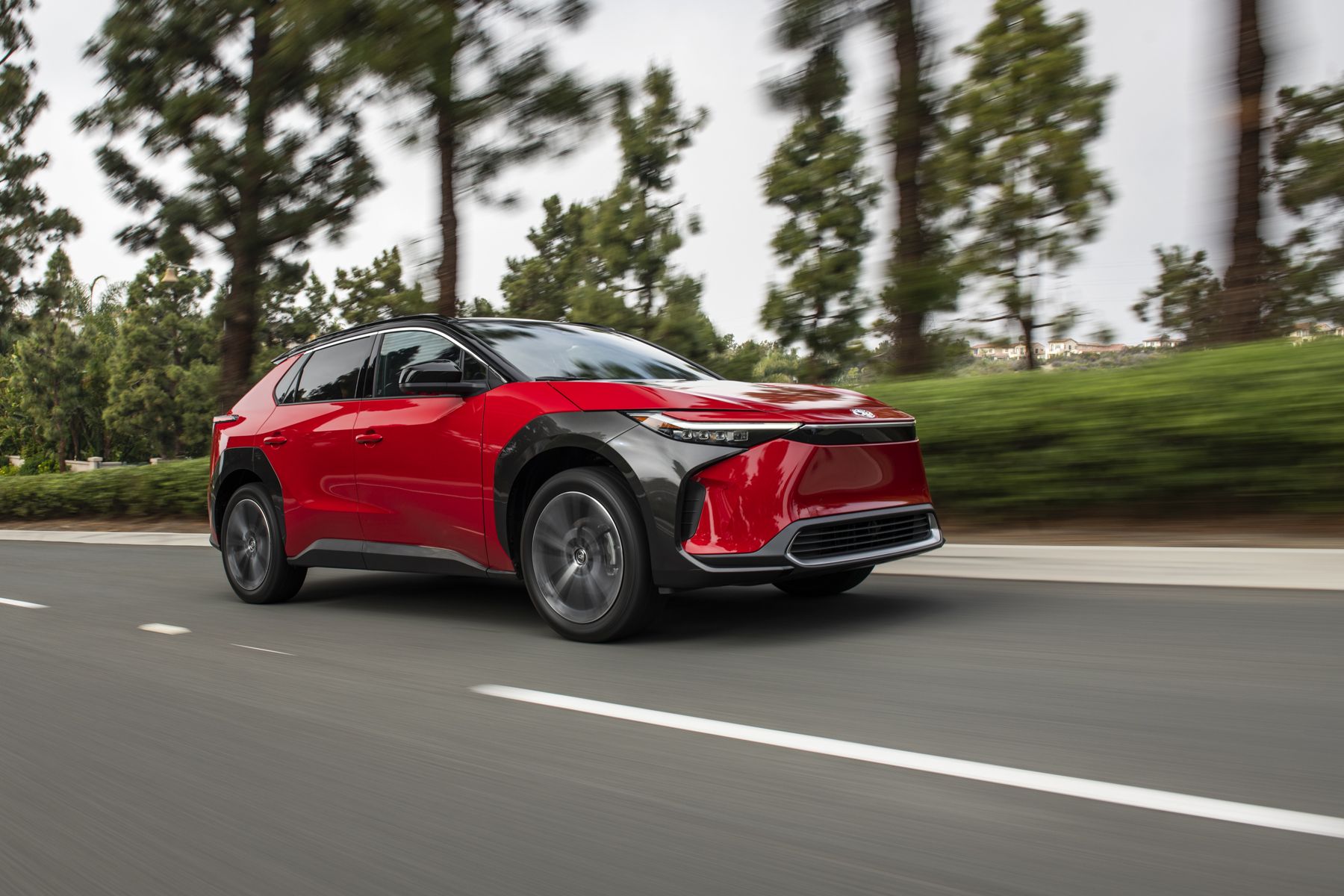
First Drive: 2023 Toyota BZ4X
The first of Toyota’s latest generation of electric vehicles trades in driving excitement for a rock-solid, reliable feel
The BZ’s chassis — e-TNGA — is beyond rock-sold. Compared with, for instance, an Ioniq5, there’s a feeling of that togetherness I mentioned, a solidity that neither the Hyundai — nor its sibling in batteries, Kia’s EV6 — can match. I have no specifications for torsional rigidity for either the Hyundai or the Toyota, but I’m betting the BZ boasts the bigger number.
Even more surprising is that said solidity also translates into the BZ4X’s handling. Indeed, the biggest surprise to the BZ is that, despite looking like just another Toyota crossover (albeit a little futuristic), the 4X is cut from a new mold. The suspension, for instance, rather than being Asian-soft, is German-firm. The steering is direct rather than flighty. The brake pedal, confounding the typical mushiness that is typical EV regenerative braking, is actually linear.
All told, the BZ4X is not only the sportiest of Toyota crossovers, but noticeably more fleet of foot than all of its mid-priced electric crossover competitors. It may not look it, but the BZ4X is fun to drive and, unlike the RAV4 Prime that generates all its fun with power — the plug-in hybrid sport-cute is the second-quickest vehicle in Toyota’s current fleet — the BZ4X impresses with superior road-holding.
Could it be wool? I believe I read somewhere wool seats are considered to be luxurious in Japan, and it would be a more renewable/eco-friendly material compared to leather.Is that a leather seat or fabric?
Like the Century?Could it be wool? I believe I read somewhere wool seats are considered to be luxurious in Japan, and it would be a more renewable/eco-friendly material compared to leather.
The mixed messaging kinda gets tiring.
"Tesla is not a direct competitor"
"Tesla is not a luxury brand competitor as their interiors suck"
"Tesla is for Early EV adopters, we make finished products for late adopters"
So do I compare the Tesla model Y to the BZ4X or a RZ450e?
Or will someone tell me Tesla is from the moon, so comparing products from earth are unfair?
"Tesla is not a direct competitor"
"Tesla is not a luxury brand competitor as their interiors suck"
"Tesla is for Early EV adopters, we make finished products for late adopters"
So do I compare the Tesla model Y to the BZ4X or a RZ450e?
Or will someone tell me Tesla is from the moon, so comparing products from earth are unfair?
I mean Tesla is trying to be a mass market vehicle company like Toyota, Ford, Honda, Hyundai...but their sales aren't their yet. I agree with you, I do not know why people cannot identify Tesla's competitors...but as long as people stop comparing Lexus to Tesla, I'm cool with whatever people say.The mixed messaging kinda gets tiring.
"Tesla is not a direct competitor"
"Tesla is not a luxury brand competitor as their interiors suck"
"Tesla is for Early EV adopters, we make finished products for late adopters"
So do I compare the Tesla model Y to the BZ4X or a RZ450e?
Or will someone tell me Tesla is from the moon, so comparing products from earth are unfair?


I thought it could be Alcantara, myself.Could it be wool? I believe I read somewhere wool seats are considered to be luxurious in Japan, and it would be a more renewable/eco-friendly material compared to leather.
The Japanese consider wool to be more luxurious than leather, in part because it is quieter than leather (when you sit down into a leather seat). I myself would prefer a fabric (wool?) -covered seat but unfortunately, Westerners equate leather with luxury.
On a market segment to equivalent market segment comparison, of course you can compare the Tesla Model Y to another mid-size crossover, such as a Lexus NX or RX or RZ (although the Model Y is between the size of the NX and the RX).The mixed messaging kinda gets tiring.
"Tesla is not a direct competitor"
"Tesla is not a luxury brand competitor as their interiors suck"
"Tesla is for Early EV adopters, we make finished products for late adopters"
So do I compare the Tesla model Y to the BZ4X or a RZ450e?
Or will someone tell me Tesla is from the moon, so comparing products from earth are unfair?
But I somehow doubt that the serious shopper of a Model Y will cross-shop with a Lexus. I imagine the Tesla shopper would consider the Lexus to be an old-fashioned, slow, boring, old-man's car. Similarly, the serious Lexus shopper may be looking for an established badge (backed by well-established, high-quality product) and something less avant-garde than the spaceship-like Tesla.
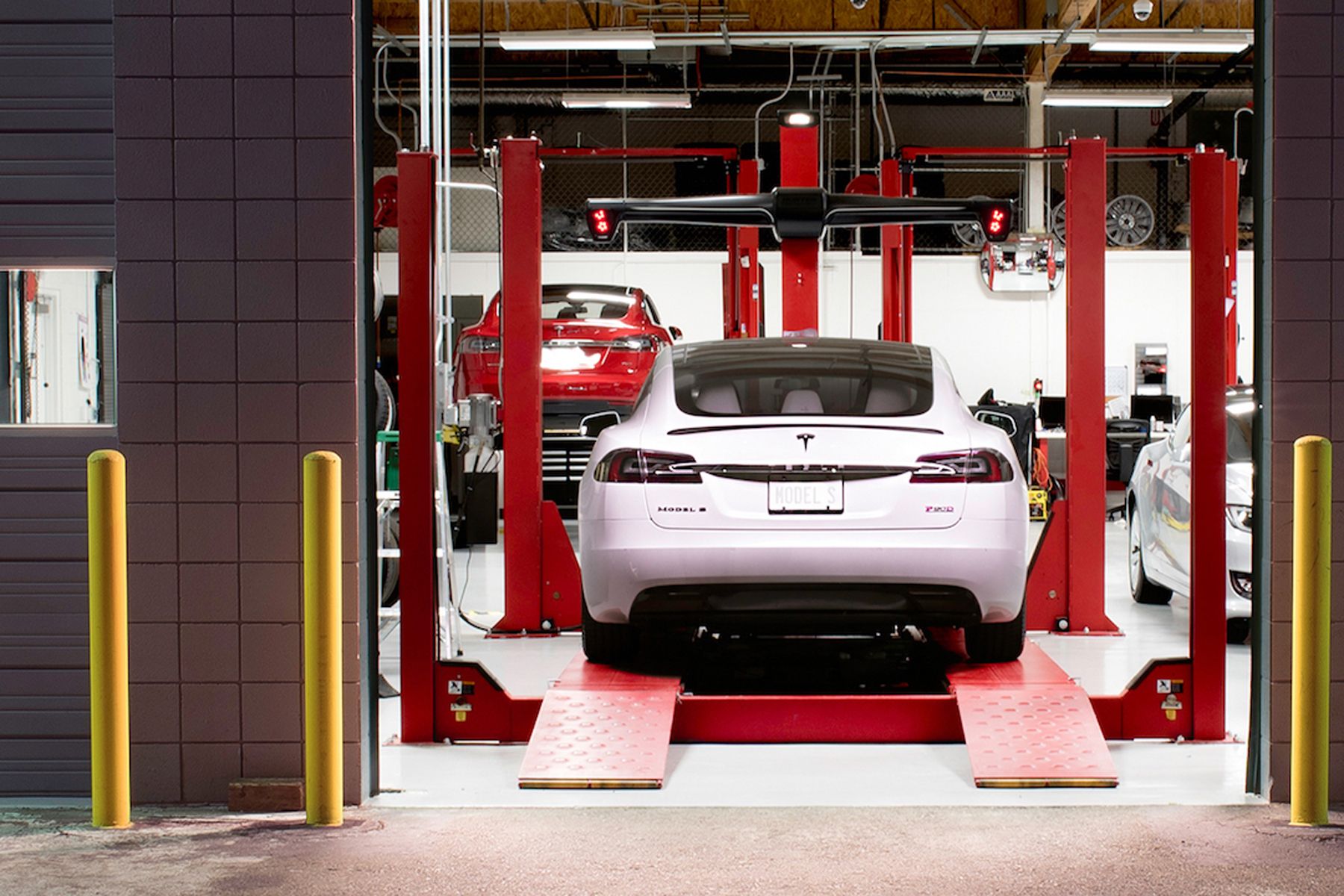
A study in the UK showed that EVs, although mechanically simpler than ICEVs and HEVs, are less reliable. This was in part because Teslas, a well-selling EV automaker, does not have very reliable cars.

CRSKTN
Expert
- Messages
- 2,427
- Reactions
- 4,055
On a market segment to equivalent market segment comparison, of course you can compare the Tesla Model Y to another mid-size crossover, such as a Lexus NX or RX or RZ (although the Model Y is between the size of the NX and the RX).
But I somehow doubt that the serious shopper of a Model Y will cross-shop with a Lexus. I imagine the Tesla shopper would consider the Lexus to be an old-fashioned, slow, boring, old-man's car. Similarly, the serious Lexus shopper may be looking for an established badge (backed by well-established, high-quality product) and something less avant-garde than the spaceship-like Tesla.
A study in the UK showed that EVs, although mechanically simpler than ICEVs and HEVs, are less reliable. This was in part because Teslas, a well-selling EV automaker, does not have very reliable cars.
Soap bars. They look like soap bars.
Kelvin2020
Admirer
- Messages
- 867
- Reactions
- 2,017
internalaudit
Expert
- Messages
- 1,227
- Reactions
- 1,180
Almost every time I shop for something, I check reviews and also reviews for competing products/services.
Tesla is a competitor. Rimac is a competitor. Bugatti is a competitor. Lada is a competitor.
But in the end, buyers gravitate towards the model they think best suits their lifestyle and finances.
Read that too. Here is one article that spoke to it.
 driving.ca
Conventional gasoline-powered cars, however, are not the most reliable vehicles on the road. That honour would seem to be held by conventional — not plug-in — hybrids. According to the survey, just 17.3 per cent of hybrids had even a single fault, and their 3.9 days off the road and 5.6-per-cent breakdown rate was superior to EVs as well. At least part of that advantage is explained by the fact that Toyota, the automaker with the most enviable reliability record in the entire industry, enjoys, according to Electrek, a healthy 22 per cent of British hybrid sales. Marrying all the survey’s data with market share numbers seems to imply it matters less what you drive than who makes it.
Tesla is a competitor. Rimac is a competitor. Bugatti is a competitor. Lada is a competitor.
But in the end, buyers gravitate towards the model they think best suits their lifestyle and finances.
On a market segment to equivalent market segment comparison, of course you can compare the Tesla Model Y to another mid-size crossover, such as a Lexus NX or RX or RZ (although the Model Y is between the size of the NX and the RX).
But I somehow doubt that the serious shopper of a Model Y will cross-shop with a Lexus. I imagine the Tesla shopper would consider the Lexus to be an old-fashioned, slow, boring, old-man's car. Similarly, the serious Lexus shopper may be looking for an established badge (backed by well-established, high-quality product) and something less avant-garde than the spaceship-like Tesla.
A study in the UK showed that EVs, although mechanically simpler than ICEVs and HEVs, are less reliable. This was in part because Teslas, a well-selling EV automaker, does not have very reliable cars.
Read that too. Here is one article that spoke to it.
Motor Mouth: Dragged down by Tesla, EVs least reliable cars on British roads
EVs are almost twice as likely to have serious problems as gas-powered cars, according to a survey by U.K. website ‘Which?’
Conventional gasoline-powered cars, however, are not the most reliable vehicles on the road. That honour would seem to be held by conventional — not plug-in — hybrids. According to the survey, just 17.3 per cent of hybrids had even a single fault, and their 3.9 days off the road and 5.6-per-cent breakdown rate was superior to EVs as well. At least part of that advantage is explained by the fact that Toyota, the automaker with the most enviable reliability record in the entire industry, enjoys, according to Electrek, a healthy 22 per cent of British hybrid sales. Marrying all the survey’s data with market share numbers seems to imply it matters less what you drive than who makes it.
Kelvin2020
Admirer
- Messages
- 867
- Reactions
- 2,017
I posted the new episode of the RZ documentary, looks like they remove the video
Of course, but some BEV advocates have double standards and distorted understanding. According to them, BEVs are more reliable because they have fewer parts, except if for Maserati and Alfa BEVs, because you know unreliability cliché based on ICEV get transferred to BEVs. They also are unable to make the difference between an appointment for maintenance and for a repair. They also seem to forget that the most ICEVs are not for repair because of mechanical issues, but electrical/electronic issues. They also forget that maintenance for an ICEV is oil changes and timing belt for those that they have to. All other maintenance is the same for BEVs (tires, brake pads/disks/fluid, air-con/filter, brushes, bulbs/leds,...).Almost every time I shop for something, I check reviews and also reviews for competing products/services.
Tesla is a competitor. Rimac is a competitor. Bugatti is a competitor. Lada is a competitor.
But in the end, buyers gravitate towards the model they think best suits their lifestyle and finances.
Read that too. Here is one article that spoke to it.
Motor Mouth: Dragged down by Tesla, EVs least reliable cars on British roads
EVs are almost twice as likely to have serious problems as gas-powered cars, according to a survey by U.K. website ‘Which?’
Conventional gasoline-powered cars, however, are not the most reliable vehicles on the road. That honour would seem to be held by conventional — not plug-in — hybrids. According to the survey, just 17.3 per cent of hybrids had even a single fault, and their 3.9 days off the road and 5.6-per-cent breakdown rate was superior to EVs as well. At least part of that advantage is explained by the fact that Toyota, the automaker with the most enviable reliability record in the entire industry, enjoys, according to Electrek, a healthy 22 per cent of British hybrid sales. Marrying all the survey’s data with market share numbers seems to imply it matters less what you drive than who makes it.
-
This site uses cookies to help personalise content, tailor your experience and to keep you logged in if you register.
By continuing to use this site, you are consenting to our use of cookies.